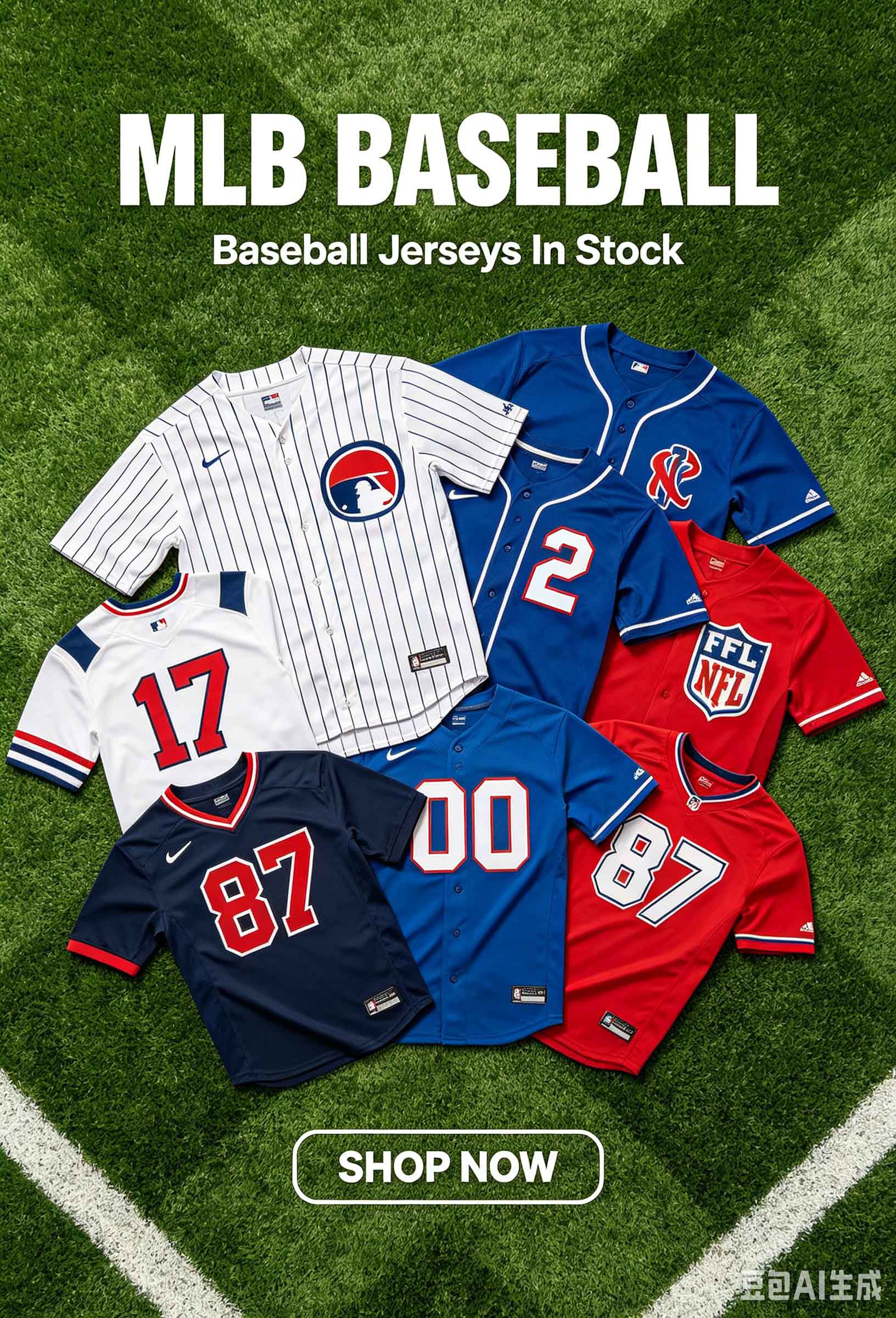
Learning how to spot a fake NFL jersey is not a fan hobby — for resellers it is margin protection. Buy from the wrong middleman and you pay three layers of markup for a garment that was never built to survive one season. Number twill lifts after a single wash, collars stretch into waves, and the mesh feels like a grocery bag. Then the returns land, and your store rating takes the hit. This guide comes from the production floor, not a review site.
Most "fakes" in wholesale are not clever counterfeits. They are cheap garments sold at authentic-level pricing. A factory running 300 GSM heavyweight mesh and double-stitched Tackle Twill will never confuse its output with a 150 GSM printed shirt. The real risk at volume is not deception — it is inconsistency. Batch one fits, batch two runs half an inch short in the chest, and your size chart becomes a lie.
Check 1: stitch density. Turn the jersey inside out and count the stitches along the number's border. A properly sewn twill number runs 8 to 10 stitches per inch with a tight zigzag lock. Anything under six is a shortcut, and that twill will lift at the corners within a few wash cycles. Run a thumb along the edge — you want a firm ridge, not loose loops that snag on a fingernail.
Tackle Twill construction is the second giveaway. Real Tackle Twill is layered: a colored base with a contrast outline layer on top, both cut clean and heat-set before stitching. Pinch the number on a genuine build and you feel the outline sitting proud of the base. Cheap builds skip the outline layer, which is why they look flat and lifeless from three feet away.
Fabric weight is where most buyers get burned. Ask for the GSM number in writing, not a photo. 300 GSM breathable polyester mesh is what we run for pro-style game jerseys — heavy enough to hold drape and shape, light enough for a September tailgate. Mesh under 180 GSM stretches at the shoulders, clings after two washes, and telegraphs every seam under stadium lighting. If a supplier cannot quote GSM, they are not the source factory.
Next, check the interior. Every stitched number should carry a soft interior backing — a bonded or sewn-in panel that keeps embroidery threads off bare skin and stops the twill from fraying inward. This is the detail budget factories cut because no buyer sees it. Your customer feels it the first time they wear the jersey without a shirt underneath.
Collar construction separates a two-season jersey from a one-wash jersey. Look for a reinforced collar band in ribbed knit with a small spandex percentage, taped at the shoulder seam so it will not pull open. Flat, untaped collars stretch into a wave after laundering. Fold the collar once and let go — if it springs back, it holds. If it stays creased, pass.
Reading labels matters too. Spotting a fake usually means catching a paper-printed tag that bleeds in the wash, a neck label glued at an angle, or a style number that does not match the cut. For bulk stitched NFL football jerseys, always request one photo of the label laid beside a tape measure. That single image catches mislabeled sizing before a carton ever ships.
Shoulder and side panel stitching tells you how serious the line is. Two-ply shoulders with double-lock stitching at the armhole take real pulling without raveling. Single-needle seams on a jersey that gets yanked over shoulder pads are a fail waiting to happen. Same story at the hem and side vents — a rolling hem or torn vent almost always traces back to a skipped bar tack at the stress point.
Size accuracy quietly kills wholesale margins. A jersey is graded to a spec sheet, not a guess. Request the chest measurement taken flat and then doubled, because a "medium" measuring 20 inches flat is a different product from one measuring 22 inches. Get the full graded size chart in both centimeters and inches, and lay the pre-production sample against it before the bulk run starts.
Stitched versus printed is a tier decision, not a quality confession. Printed jerseys are correct for practice squads, youth packs, and fan-tier retail where price point outweighs durability. Stitched is correct for pro-style game jerseys, retail resale, and anything a customer will wear thirty times. Stocking both tiers lets you compete at the low end without discounting your good inventory into the ground.
When vetting a China source, request three things before discussing price: a GSM test report, a short QC video of the actual stitching line, and a pre-production sample with your number set applied. A factory running real inventory sends all three inside a week. A trading company stalls, then quotes a number that already carries their markup baked in.
- AQL 2.5 on major defects — stitch density, number placement, collar recovery
- AQL 4.0 on minor defects — label alignment, thread trimming, fold quality
- Pulled samples from every carton, reworked or replaced before shipment
- Written GSM and sizing spec attached to each purchase order
Pricing runs in real tiers. Small trial orders cost more per unit because cutting, digitizing, and setup are front-loaded. Cross a few hundred pieces and the unit price drops hard, since the line is already running your number set. Ask for the complete ladder — 50, 100, 300, 500, 1,000 pieces — before you commit to a quantity.
Hand your customers wash instructions, because returns drop when you do. Turn the jersey inside out, wash cold on gentle with mild detergent, and skip bleach and fabric softener entirely. Never tumble dry a stitched jersey — heat shrinks twill and curls collar bands. Hang dry in shade, then press number edges with a cool iron through a cloth.
How to wash a stitched football jersey matters more than most buyers expect. Roughly a third of the "defective" returns we inspect trace back to laundering damage: hot water, dryer heat, bleach on a twill number. Print a small care card, drop it in every poly bag, and your defect complaints fall fast.
Three mistakes show up over and over. Ordering a sample in the wrong size and grading the entire run off it. Accepting a photo of a different batch as proof of quality. Chasing the lowest quote instead of the lowest landed cost. A jersey that costs two dollars less but returns at 12% is not cheaper — run the math on landed cost, defect rate, and reorder speed.
Lead times depend on the job. In-stock blanks with stock number sets ship in days. Custom name-and-number runs take longer because digitizing and cutting are per-order. Confirm the production window in writing, and confirm whether your quote is FOB, EXW, or delivered. Vague shipping terms are where wholesale margins quietly disappear.
How many stitches per inch should a stitched NFL jersey have? Aim for 8 to 10 per inch with a tight zigzag lock. Under six per inch is a red flag for corner lifting after a few washes.
Can a fake NFL jersey still have Tackle Twill numbers? Yes. Twill alone proves nothing. Check the outline layer, stitch density, and interior backing before you accept it as game-grade.
What GSM is right for wholesale NFL jerseys? Use 300 GSM for pro-style game jerseys and retail resale. Drop to 180–250 GSM for practice jerseys, youth league packs, and budget tiers.
How does pricing change as volume grows? Setup costs dominate small runs. Expect meaningful per-unit drops at 300, 500, and 1,000 pieces, since cutting and embroidery digitizing are already paid for.
If you want a supplier who shows you the stitch count instead of talking around it, start with the stock catalog at Jerseys Wholesale China. You get first-hand factory pricing, low MOQ on trial orders, tiered discounts as volume climbs, and direct global shipping with QC documentation attached to every order. Send your number sets and size breakdown, and we will quote the full ladder the same day.