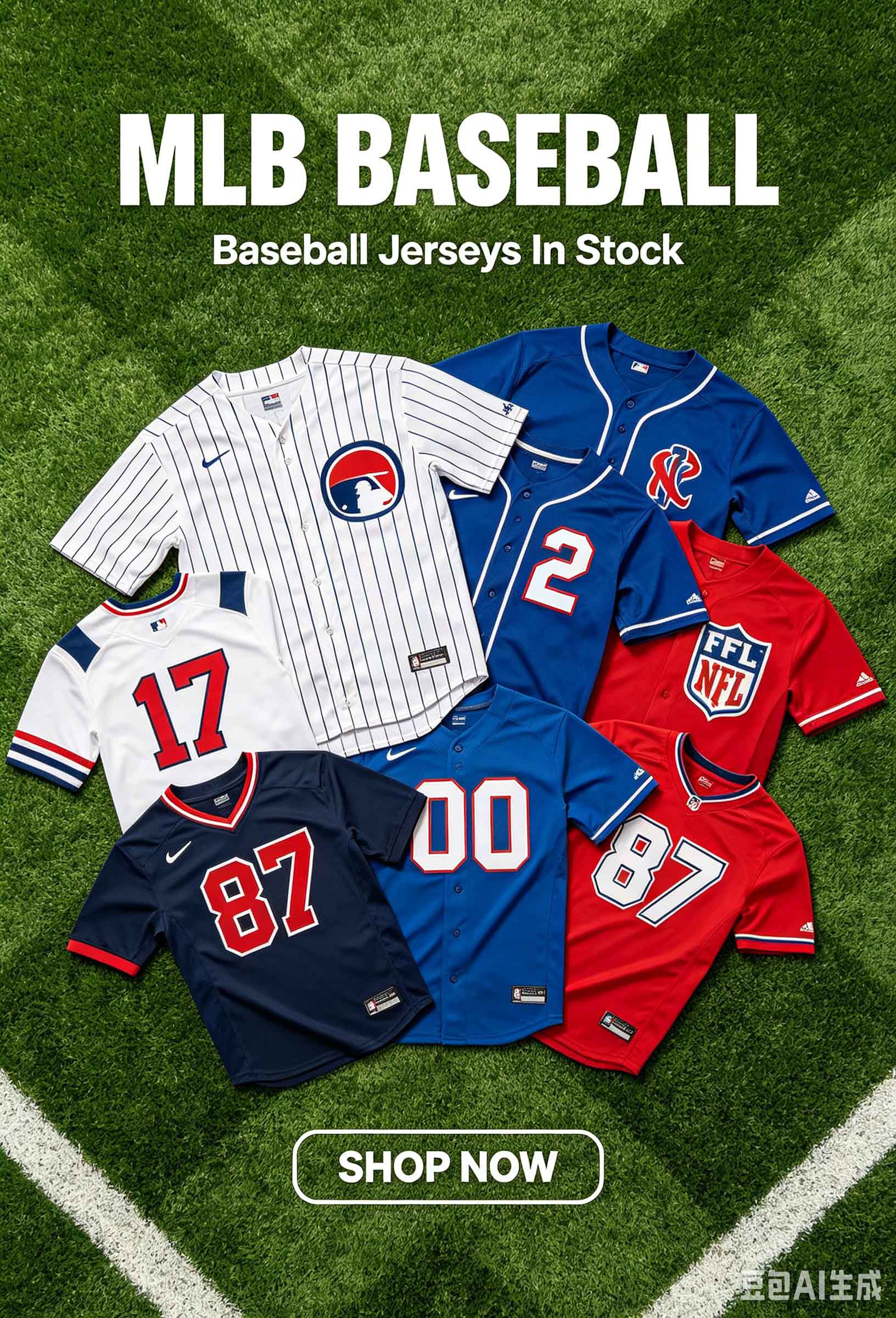
If you buy in volume and want to know how to spot a fake NFL jersey before it ever hits your customers, start on the factory floor instead of the logo. Most bad units that resellers get stuck with do not fail because of a wrong patch — they fail because the fabric weight, stitching, and interior finish were cut to save two dollars a piece. Overseas middlemen mark those units up twice, ship them slow, and leave you holding the returns. A direct China source factory removes both problems: tiered factory pricing, documented inline QC, and 5–9 day production on stock runs. Here is the inspection routine I run on the line every week.
The first thing I check is fabric weight, measured in GSM. Licensed-spec NFL jerseys are built on 300 GSM breathable polyester mesh with a wicking finish. Cheap counterfeits run 170–200 GSM and feel like a gym t-shirt in the hand. Squeeze a shoulder panel and watch how fast it springs back — thin mesh collapses and stays creased.
Next, weigh a single size L body on a kitchen scale. A properly built 300 GSM jersey sits in the 300–380 gram range before polybag. If your sample weighs 210 grams, you are being sold a print shop product dressed up as a stitched jersey.
Number construction is the fastest tell. Real stitched jerseys use double-stitched Tackle Twill numbers — a layer of colored twill on a contrasting underlayer, cut clean, then locked down with a tight satin-stitch border. Screen print or heat transfer on a listing that claims "stitched" is the single most common fake flag I see in incoming samples.
Flip the numbers over and look at stitch density. On our line we run 8–10 stitches per inch with a proper zig-zag anchor stitch at every corner and inside angle. Under-stitched corners lift within three washes because there is nothing holding the twill. Pick at a corner with your fingernail for five seconds — if it moves, the run was rushed.
Now turn the jersey completely inside out. This is where most factories hide their shortcuts. Quality builds include a soft interior backing behind the twill so the embroidery never scratches the wearer's skin. If you see raw twill edges, exposed bobbin thread, or hard glue residue on the inside, that jersey will generate complaints and returns.
Look at the collar next. We use reinforced collar bands with a ribbed knit and a double-needle cover stitch, which keeps the neckline from stretching out after repeated wear. Fake-market collars are single-stitched and go wavy after two cycles in a domestic machine. Hold the collar between both hands and pull gently — a good band returns to shape instantly.
Sleeve stripes and shoulder panels must be stitched, not glued. Heat-pressed stripes start lifting at the edges after one hot dry cycle, and there is no repair for that. Stitched stripes survive a full season of league play, which matters if you sell to team programs rather than one-off buyers.
Check the nameplate alignment on the back. The plate should be centered over the numbers, letter spacing should be even, and the stitch line should sit parallel to the shoulder seam. Slight misalignment is normal in hand-sewn production, but a plate that is 8mm off-center means the factory has no template discipline.
Labels matter for resellers who sell into retail or team stores. Look for a woven jock tag, a clean neck label, correct size tagging, and country-of-origin printing that is sharp rather than dot-matrix blurry. If the tag says one size and the chest measurement says another, the factory is tagging by guesswork.
Color is the last physical check. Order against a Pantone reference and compare under daylight, not warehouse LEDs. Team navy and team red are the two colors where budget dye lots drift most. If your supplier cannot send a color swatch before production, you are accepting whatever comes off the line.
Stitch pull testing is simple and worth doing every shipment. Clamp a number edge and pull with roughly 4–5 pounds of force — a properly locked double-stitch holds, a single-stitch chain gives. I run this on 10% of units in any bulk Stitched NFL run, and on 100% of units in the pre-production sample stage.
If you are scaling a reseller catalog, work with a factory that publishes its construction spec instead of one that only sends photos. You can review the current build standards and full category lineup at stitched NFL jerseys wholesale, including mesh weight, twill thickness, and thread counts before you place a single unit order.
Wash testing belongs in your approval process, not your customer's complaints inbox. Run one sample through three cycles before you sign off on a bulk run. Here is the routine:
- Turn the jersey inside out and close any zippers or snaps nearby to prevent snagging.
- Machine wash cold on a gentle cycle with a mild detergent — no bleach, no fabric softener.
- Never tumble dry on heat; heat is what kills twill adhesive and shrinks mesh.
- Hang dry in shade and reshape the collar while damp.
- Iron only the reverse side on low, never directly on embroidery.
That care card is also a selling tool. Pass it to your end customers and your return rate on stitched product drops noticeably, especially with youth and amateur league buyers who wash everything on hot.
Sizing discipline prevents a different kind of loss. Chest width measured flat, armpit to armpit, is a more reliable number than a generic S–XL tag. Build a simple chart using flat chest, body length, and sleeve length, and publish it. For bulk youth football jerseys, always request a youth-specific block rather than scaled-down adult patterns, because the shoulder-to-hem ratio is different and parents notice.
On the factory side, a serious supplier runs documented QC rather than eyeballing the carton. Ask what inspection standard they use — AQL 2.5 is the norm for apparel, plus a 4-point fabric inspection before cutting, needle detection after sewing, and a final random pull after packing. If a supplier cannot name a standard, they are not inspecting.
Pricing should be published in tiers, not quoted case by case. Expect break points around 50, 100, 300, and 500+ units, with custom names and numbers adding a modest per-unit charge and 3–5 extra production days. Always buy a pre-production sample first, approve it in writing with photos, and hold that sample as the gold reference for the bulk shipment.
Shipping options affect your margin as much as unit price. Express air runs 3–7 days for sample and urgent restock orders. Consolidated air freight lands around 8–12 days at a lower per-kilo rate, and DDP sea freight runs 25–35 days door to door. For stock designs that never change, sea is the right call — you lock inventory cheaply and protect your sell price.
Run the margin math before committing. When a mid-tier importer quotes $18–22 for a stitched jersey that a China source factory ships at roughly $9–13 depending on volume and customization, that spread is your entire profit. Cutting out one layer of middlemen usually returns more than any discount you will negotiate on shipping.
Frequently asked questions from wholesale buyers
- How do I tell stitched from printed without a loupe? Look at the back of the number. Stitched twill has visible thread and a separate underlayer; printed numbers show a flat, glossy film with no penetration.
- What GSM should I demand? 280–320 GSM polyester mesh for retail-grade jerseys. Anything under 200 GSM belongs in a practice or fan-tier program, not a licensed-spec catalog.
- How do I wash a stitched football jersey so the twill stays put? Cold water, inside out, gentle cycle, hang dry, and never apply direct heat to embroidery.
- Is there a minimum for custom names and numbers? Most source factories start custom numbering around 50 pieces per design, while stock blanks can move at much lower quantities.
Stop paying two middlemen for the same jersey. Go straight to the source, request the current factory price list and GSM specs, and start with a sample before you commit to a full run. Visit Jerseys Wholesale China to see the full stitched NFL catalog, confirm low MOQ options, and lock in first-hand factory pricing with worldwide express and DDP direct shipping.