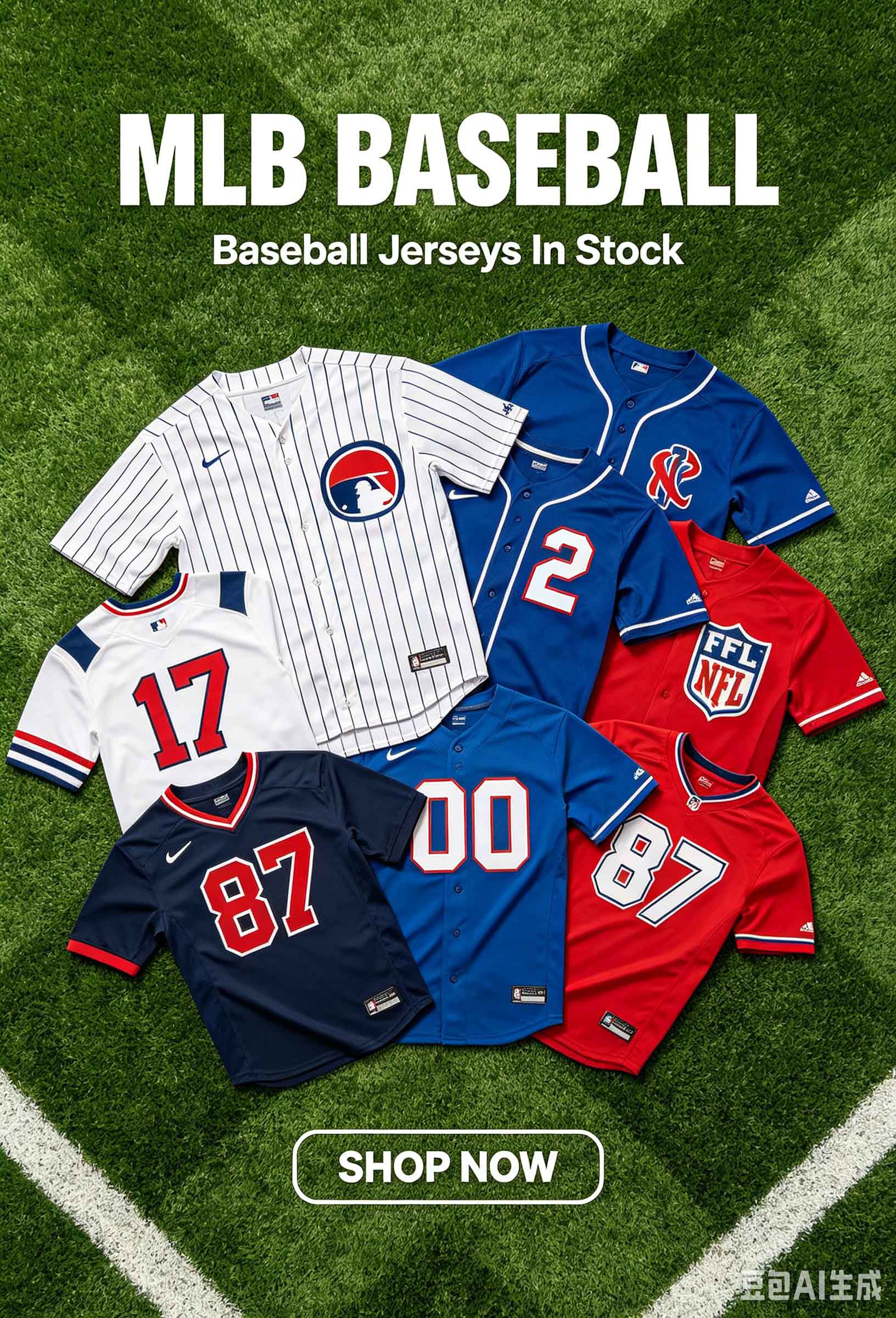
Two seasons ago I walked into a pop-up shop near the stadium about two hours before kickoff and found a rack of clearance NFL jerseys marked down because the season was almost over. I paid $35 for one that still had a $119.99 tag stapled to it. I've been hooked on end-of-season racks ever since — and I've also bought two duds, both times because I didn't look closely enough at what I was actually holding.
Clearance NFL jerseys are cheap for a reason — here's how to find the good ones. Most of the time the reason is boring: licensing cycles. Nike took over the NFL contract from Reebok in 2012, and every few years the templates get tweaked. Collar shapes change, sleeve stripes move, a team swaps a shade of navy. When the new stock lands, the old stock has to go somewhere, and that somewhere is usually a discount rack.
Before you buy anything, figure out which tier you're looking at, because "clearance" gets slapped on all three. Nike's line runs Game, Limited, and Elite. Game is the entry level — printed numbers and nameplate on a polyester mesh body. Limited steps up to stitched twill numbers with a slightly more tailored cut. Elite is the closest thing to what players actually wear, and the price reflects it. A discounted Elite is a genuinely great deal. A discounted Game is just a cheaper shirt, which is fine if that's what you wanted.
Sizing is where most people get burned, myself included. I'm a medium in basically everything, so I ordered a medium Game jersey and it fit like a compression top. Nike's Game jerseys run snug through the chest compared to a regular tee. I swapped to a large and it drapes the way a jersey should — loose enough to wear over a hoodie in December. If you're between sizes, go up. If you're buying Elite, go up two, because the athletic cut is genuinely tight.
Then there's the question of what you're actually buying. Clearance stock tends to fall into a few predictable buckets:
- Players who changed teams or retired after the previous season
- Teams that missed the playoffs and had unsold inventory sitting in a warehouse
- Last year's template, which looks nearly identical unless you know what to look for
- Extreme sizes — 3XL and small are always the last to move
None of those are dealbreakers. A stitched jersey of a guy who got traded is still a stitched jersey, and honestly, if you liked him on that team, the memory doesn't expire when he signs elsewhere. What I'd avoid is anything with a printed number that's already cracking, or a white jersey with visible yellowing around the collar.
Fabric and care matter more than people think. That mesh body is designed to breathe, but it snags on everything — velcro, zippers, the corner of a tailgate table. Wash it inside out in cold water and hang it to dry. Never put a stitched jersey in the dryer; the heat does a number on the twill and you'll end up with numbers that curl at the corners. I learned that one the expensive way with a Limited jersey I'd waited six weeks for.
If you're buying for someone else, a legend is a safer bet than a rookie. Jerry Rice, Barry Sanders, Lawrence Taylor — those names aren't going anywhere, and a fan will wear them in ten years. A fourth-round pick who had one good season is a gamble, even at 70% off. Ask about their size, though. Guessing wrong on a jersey is worse than guessing wrong on a t-shirt, because nobody wears an ill-fitting jersey twice.
One last thing worth knowing: the player doesn't have to still be on the roster for the jersey to feel right. Half the jerseys I see at games are for guys who left years ago. That's the whole point of a jersey. It's a timestamp. So if you find a discounted one that means something to you, grab it and wear it to the next game.